Snack, Combo, Beverage or Smart: Which Vending Machine Should You Buy?
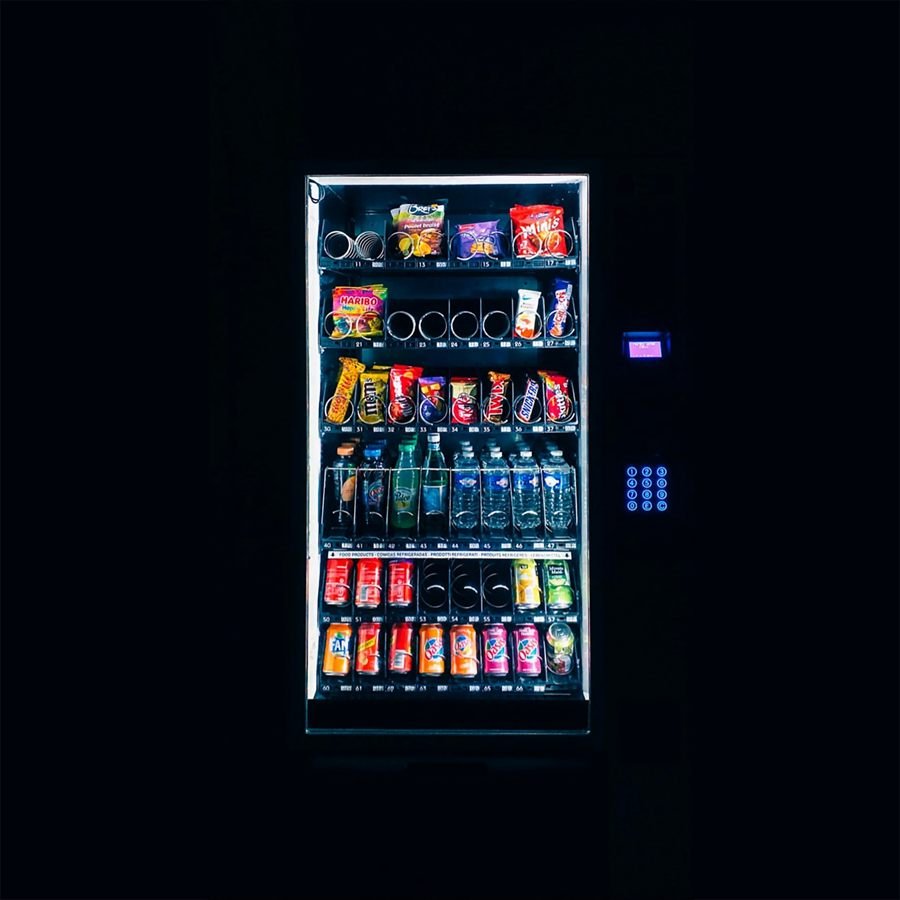
Pick the machine type from what the location already buys, not from what has the most features. A snack machine suits a site where people want something to eat at their desk. A combo suits a break room with one spare wall. A beverage machine suits somewhere hot, busy and thirsty. A smart machine suits a site where nobody carries cash and you cannot visit often.
Here is how to tell which one you are looking at, using five questions that take about ten minutes to answer.
1. What do people at this location actually buy?
Stand where the machine will go and watch, or ask whoever runs the site. You are looking for one of three patterns.
- Mostly food. Chips, candy, granola, crackers. A snack machine is the cheapest correct answer, starting under $2,500.
- Mostly drinks. Cans and bottles, especially in a warm building or an outdoor workspace. A beverage machine holds far more drinks per square foot than a combo does.
- Both, in roughly equal measure. A combo machine. This is the most common answer and the reason combos are the largest part of our range.
The mistake to avoid is buying a combo “to cover both” at a site that overwhelmingly buys one thing. You end up with half a machine of dead stock and half a machine that runs empty.
2. How much wall do you have?
Measure the space before you shop, including the door swing. A vending machine door is wide and it needs clearance to open fully for restocking, not just to stand there.
If you have one machine’s worth of wall and need to serve both snacks and drinks, that decides it: combo. If you have room for two units, two specialised machines will almost always hold more product and break down less often than one machine trying to do everything.
3. Is there a suitable power outlet?
Nearly every machine we sell runs on a standard 115 V outlet. The question is not voltage, it is whether the circuit is already loaded. Refrigerated machines draw continuously and a dedicated circuit is strongly recommended. Finding this out after delivery is an expensive way to learn it.
Ambient snack machines are the forgiving option here. They draw very little and will run happily on a shared circuit.
4. Will anyone pay with cash?
This is the question that has changed most in the last five years, and it is the real argument for a smart machine.
If your location is an office, a gym, a university building or anywhere under about 35 years old on average, a meaningful share of customers simply will not have coins. A machine without a card reader loses those sales silently, and you never see the transactions that did not happen.
Cashless also raises average spend, because nobody is limited to the change in their pocket. If you are choosing between a cheaper machine without a reader and a slightly dearer one with contactless, the reader is usually the better buy. Do check whether the payment system carries a monthly fee.
5. How often can you get there?
A machine you can restock daily can be smaller and simpler. A machine at a site 40 minutes away needs capacity and, ideally, telemetry so you know whether the trip is necessary.
Machines in our range hold roughly 300 to 500 items at the smaller end and 500 to 800 at the larger. If you are placing a machine somewhere you will visit weekly, buy toward the top of that range. The extra capacity is far cheaper than the extra journeys.
The types, side by side
| Type | Best for | Typical price |
|---|---|---|
| Snack | Offices, workshops, waiting areas; lowest cost of entry | $4,895 |
| Combo | Break rooms with one wall; the default choice | $6,447 |
| Beverage | Hot or high-traffic sites; maximum drinks per footprint | $5,694 |
| Smart / cashless | Cashless sites, unattended retail, remote monitoring | $6,495 |
| Fresh food | Hospitals, 24-hour workplaces, campuses without a canteen | $4,772 |
Prices shown are the median for that type across our current range, and all include freight.
What about fresh food?
Fresh food machines are the highest-maintenance option and the most location-dependent. They need reliable footfall at meal times, a stocking routine that respects use-by dates, and a health-lock control that disables sales if the cabinet drifts out of temperature. Where the demand genuinely exists, at a hospital or a plant running night shifts, nothing else serves it. Where it does not, the waste will eat the margin quickly.
Still unsure?
Our machine finder narrows the catalogue by type, capacity, placement and payment system. The buyer’s guide covers the placement and power questions in more depth.
Or just describe the location to us. Call +1 813-942-7654 or email info@citysvending.com with the footfall, the space and what you think people will buy, and we will point you at two or three machines that fit, including the cheapest one that does the job.