AI Vending Machines: How They Work, Cost and Where They Pay Off
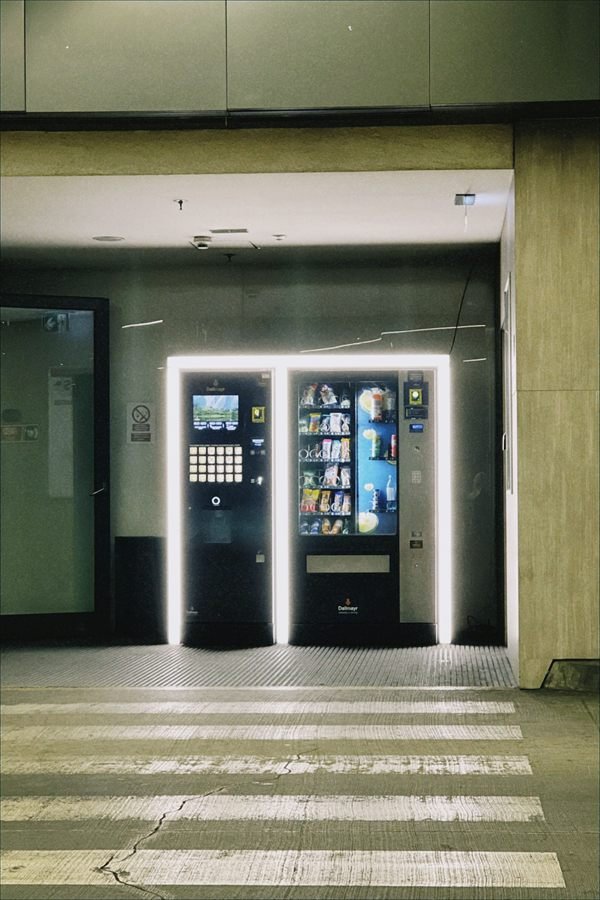
Quick answer: an AI vending machine, usually called an AI smart cooler, is a locked glass-door fridge or cabinet that opens when the customer taps a card or phone. The customer takes whatever they want and closes the door; cameras with product recognition, shelf weight sensors or both work out what was taken, and the card is charged. There are no spirals, so it can sell almost any packaged product, from drinks to fresh meals. New AI smart coolers in our catalog cost $2,999 to $13,150 (median $6,495) across 19 machines.
How an AI vending machine works
- Unlock. The customer taps a credit or debit card or a phone wallet on the reader, or scans a code in the operator’s app. The card is pre-authorized and the door unlocks.
- Take. The customer opens the door and picks up products, and can put items back.
- Recognize. When the door closes, cameras with product-recognition software, weight sensors on each shelf, or both determine what left the cabinet.
- Charge. The card is charged for those items only and a receipt is sent or shown.
- Report. Sales, stock levels and temperature go to the operator’s dashboard over Wi-Fi or a cellular connection.
AI vending machine vs traditional vending machine
| AI smart cooler | Traditional spiral machine | |
|---|---|---|
| How products are sold | Customer opens the door and takes them | Customer picks a selection; a spiral drops it |
| Products | Almost any packaged size or shape: meals, salads, multipacks, large bottles | Items that fit the spiral or column |
| Payment | Card and phone only (cashless) | Usually coins and bills, plus a card reader |
| Selling several items at once | Yes, in one transaction | One selection at a time |
| Moving parts that can jam | Few (door lock) | Spirals, motors, delivery mechanism |
| Typical locations | Offices, gyms, hotels, apartments, hospitals: indoor and supervised | Almost anywhere, including outdoor-rated models |
| Ongoing costs | Software or platform fee and card processing | Card reader service and processing, if fitted |
How much does an AI vending machine cost?
New AI smart coolers in our catalog cost $2,999 to $13,150 (median $6,495) across 19 machines, plus a flat $150 freight per order. The price rises with size, with a freezer or ambient section, and with the recognition system: camera-based cabinets generally cost more than weight-only ones. Budget also for the monthly software or platform fee and card processing fees, which vary by manufacturer and plan; each product page lists the payment and connectivity the machine uses. Compare all of them in smart vending machines and AI smart coolers.
Prices by machine type, live from our catalog:
| Machine type | Machines | Lowest | Median | Highest |
|---|---|---|---|---|
| Snack machines | 20 | $2,489 | $4,895 | $8,145 |
| Drink machines | 14 | $5,199 | $5,694 | $9,646 |
| Combo machines | 28 | $2,474 | $6,447 | $10,995 |
| Food machines (refrigerated / frozen) | 11 | $2,999 | $7,293 | $10,999 |
| Smart machines and AI coolers | 19 | $2,999 | $6,495 | $13,150 |
| Small and countertop machines | 8 | $2,489 | $3,499 | $6,447 |
| Outdoor-rated machines | 9 | $7,919 | $8,553 | $10,409 |
| Specialty machines (PPE, supplies, books, ice) | 13 | $3,924 | $5,099 | $10,409 |
| All machines | 93 | $2,474 | $5,695 | $13,150 |
Live figures from our published catalog on October 30, 2026. Machine prices only; every order adds a flat $150 freight charge within the United States.
Is an AI vending machine worth it?
An AI smart cooler earns its higher price where its strengths matter:
- Higher-priced products. Fresh meals, salads and large drinks sell at prices that a spiral machine cannot handle well.
- Bigger baskets. Customers can take several items in one visit.
- Cashless locations. Offices and gyms where nearly everyone pays by card or phone.
- Supervised indoor sites. Glass-door coolers suit indoor locations with staff or cameras nearby; for unsupervised or outdoor sites, a traditional machine is usually safer.
A traditional machine is the better choice where many customers pay cash, where products are low-priced snacks and cans, or where the location is outdoors or unsupervised. For a side-by-side of the options, see what is a micro market? and which vending machine should you buy?
What sells in an AI vending machine
Fresh and refrigerated food (sandwiches, salads, wraps, yogurt, fruit), cold drinks in any bottle size, protein and healthy snacks, frozen meals and ice cream in models with a freezer, and convenience items. See healthy vending machines and the best vending machine snacks for product ideas.
“AI vending machine” in the news
The phrase is also used for experiments in which an AI model runs a small shop, choosing products, setting prices and talking to customers. Those are tests of AI agents, not machines you can buy. The AI in a smart cooler is narrower: recognizing which products a customer took.
Frequently asked questions
What is an AI vending machine?
A smart cooler that unlocks with a card or phone, lets the customer take products, and uses cameras, weight sensors or both to charge for what was taken.
How much does an AI vending machine cost?
New AI smart coolers in our catalog cost $2,999 to $13,150 (median $6,495) across 19 machines, plus $150 freight. Add a monthly software fee and card processing.
Do AI vending machines take cash?
No. They are cashless: credit and debit cards and phone wallets, sometimes an app.
Can people steal from an AI vending machine?
The card is pre-authorized before the door opens and charged for what is removed, so taking an item without paying is difficult. Damage and tampering are the bigger risk, which is why these machines suit indoor, supervised locations.
Do AI vending machines need Wi-Fi?
They need a connection for payments and reporting: Wi-Fi, cellular or Ethernet depending on the model. Each product page states the connectivity.
Are AI vending machines profitable?
They can be at locations with steady traffic and customers willing to pay for fresh food and larger items. Work out the numbers with the method in how much vending machines make.