How Much Does a Vending Machine Cost? 2026 Price Guide
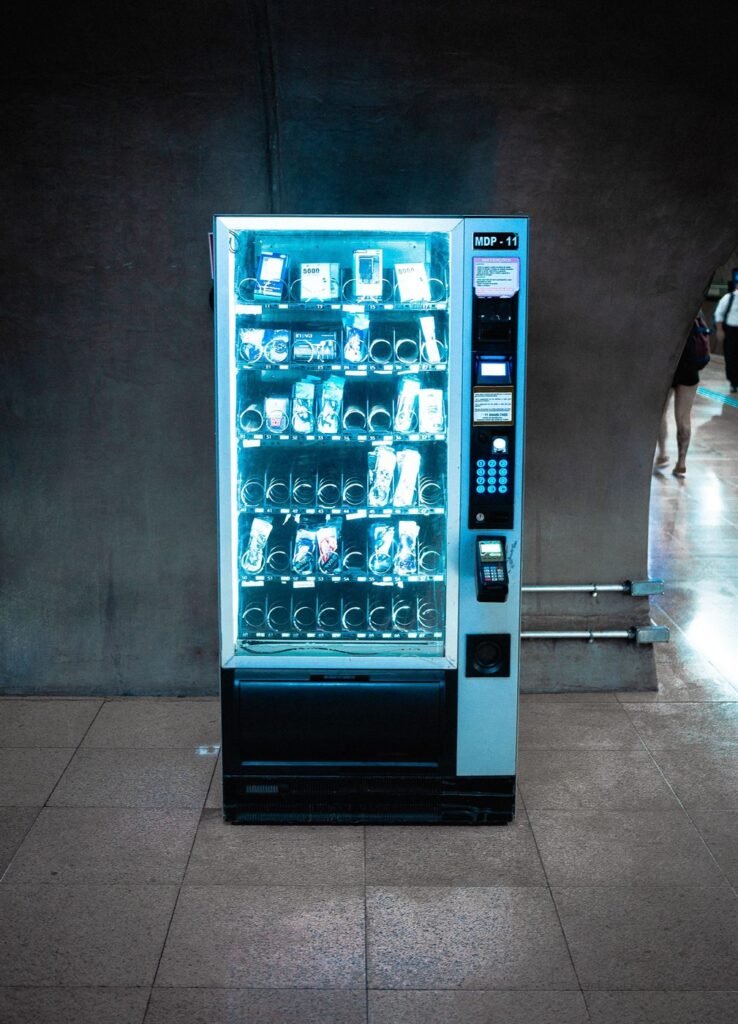
A new commercial vending machine costs between $2,474 and $13,150. Across the 93 machines we currently stock the median price is $5,695, and most buyers land between $4,500 and $7,000. Those are our actual published prices, not estimates, and every one of them includes flat-rate freight to any address in the United States.
The spread is wide because “vending machine” covers everything from a countertop snack unit for a ten-person office to an AI-powered smart cooler that recognises what a customer picked up. Below is what each type really costs and what moves the number.
Vending machine prices by type
These bands come from our own catalogue as of September 2026.
| Machine type | Lowest | Typical | Highest |
|---|---|---|---|
| Snack | $2,489 | $4,895 | $8,145 |
| Specialty | $3,924 | $4,519 | $10,409 |
| Fresh food | $4,164 | $4,772 | $8,483 |
| Beverage | $5,199 | $5,694 | $9,646 |
| Combo (snack + drink) | $2,474 | $6,447 | $10,995 |
| Smart / cashless | $2,999 | $6,495 | $13,150 |
Snack machines are the cheapest way in. A basic spiral merchandiser starts under $2,500 and a well-specified six-wide unit runs about $4,900. If you are placing your first machine and the location mostly buys chips and candy, this is where to start. Browse snack machines.
Combo machines cost more but replace two units. The median is $6,447, roughly $1,500 above a snack machine, and in exchange you serve drinks and snacks from one footprint and one power outlet. For a break room with limited wall space this is almost always the better economics. Browse combo machines.
Smart machines have the widest range of all, from $2,999 for a compact cashless cooler to $13,150 for a computer-vision unit. The jump is not about capacity, it is about the technology in the door. Browse smart machines.
What actually drives the price
Refrigeration
A compressor, insulated cabinet and health-lock control add cost and add running expense. Ambient snack machines are the cheapest to buy and cheapest to run. If the location will not sell cold drinks or fresh food in volume, you are paying for a compressor that earns nothing.
Capacity
Machines in our range hold roughly 300 to 500 items at the smaller end and 500 to 800 at the larger. Capacity matters less than you would think for cost, and more than you would think for labour: a machine that runs dry between visits costs you sales and an extra trip.
Payment hardware
Coin and bill acceptance is standard. Card readers and contactless are the single most common upgrade and the one most likely to pay for itself, because cashless customers spend more per transaction and you stop losing sales to empty pockets. Some readers also carry a monthly service fee, so ask about that before you compare two machines on sticker price alone.
Indoor or outdoor
Outdoor-rated cabinets add weather sealing, anti-vandal glass and often heating or cooling for the electronics. Expect to pay a premium over the indoor equivalent of the same capacity.
Connectivity
Telemetry lets you see stock and sales remotely instead of driving to the machine to find out. On a single machine in your own building it is a luxury. Across a route of ten it changes how many people you need.
Costs beyond the machine
The purchase price is the largest number but not the only one.
- Freight. Ours is a flat $150 per order to any US address, included and shown before checkout. Watch for sellers who quote the machine and calculate freight later, because a crated machine on a pallet is not cheap to move.
- Electricity. A refrigerated machine typically runs continuously. Budget for it as a fixed monthly cost, not a rounding error.
- Stock. Filling a 500-item machine for the first time is a real outlay before you take a single dollar back.
- Card processing. A percentage of every cashless sale, plus any reader subscription.
- Maintenance. Bulbs, gaskets, keys and the occasional coin mech. Low but not zero.
Is a cheaper machine a false economy?
Sometimes, and the deciding factor is usually the location rather than the machine. A $2,500 snack unit in a busy workshop can outperform a $9,000 smart cooler in a quiet lobby. Match the machine to the footfall and the buying habits of the people who walk past it, then buy the cheapest machine that does that job properly.
Where cheap does bite is on used equipment. A refurbished machine with an obsolete control board or a coin mech nobody stocks parts for will cost more over three years than a new unit with a warranty. Everything we sell is new.
How to narrow it down
If you know the location and roughly what it should sell, our machine finder filters the catalogue by type, capacity and payment options in about a minute. If you are earlier than that, the buyer’s guide walks through placement, power and the questions worth asking before you spend anything.
Every price on this site includes freight, ships in 7 to 10 business days, and is covered by a 30-day return window with return shipping paid by us. If you want a second opinion before you commit, call +1 813-942-7654 or email info@citysvending.com and we will tell you honestly whether the machine you are looking at fits the site you have described.