How Do Vending Machines Work? Parts, Payment and Delivery Explained
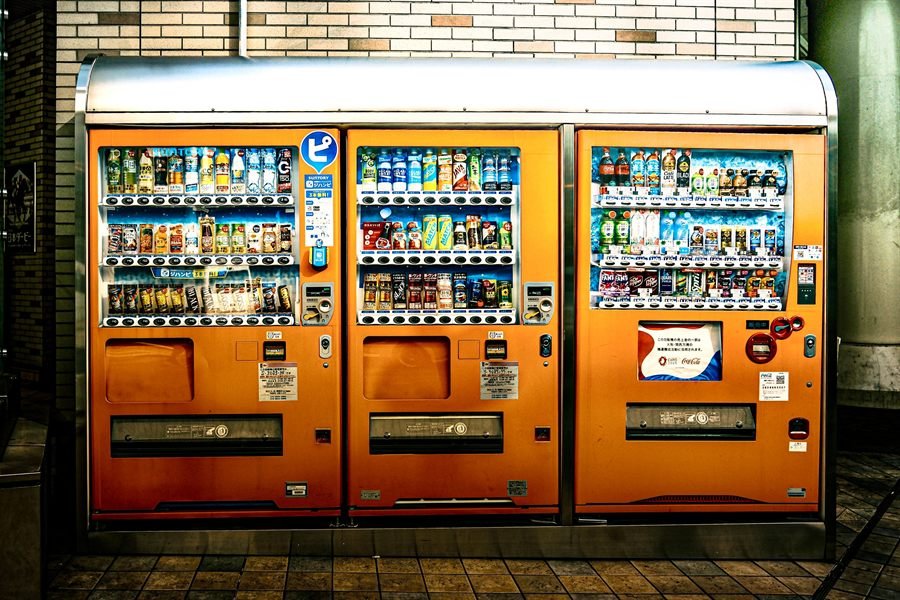
Quick answer: a vending machine is a controller connected to a payment system and a delivery mechanism. When a customer pays with coins, bills or a card, the payment device tells the controller how much credit is available; the customer picks a selection; the controller turns the motor for that selection (usually a spiral coil) until the product drops; and a sensor across the delivery bin confirms that it fell. Refrigerated machines add a compressor, and AI smart coolers replace the spirals with a locked glass door, cameras and sensors that charge the card for whatever was taken.
Parts of a vending machine
- Cabinet and door: a steel cabinet with a locked main door, usually with a glass front so customers can see the products.
- Controller: the machine’s computer (the vending machine controller, or VMC). It stores prices, runs the motors, reads the keypad and talks to the payment devices.
- Payment devices: a coin mechanism, a bill validator and a cashless card reader, connected to the controller over MDB (Multi-Drop Bus), the industry-standard vending interface.
- Delivery mechanism: spiral coils, drink stacks or an elevator that moves the product to the delivery bin.
- Drop sensor: beams across the delivery area that detect a falling product.
- Refrigeration: a compressor and evaporator in refrigerated and frozen machines.
- Telemetry (on connected machines): a modem that reports sales and stock levels to an online dashboard.
How a vending machine takes payment
Coins roll past sensors that measure their size and metal content; genuine coins are sorted into tubes for change or into the cash box, and rejected ones return to the customer. Bills are pulled into a validator that checks them with optical and magnetic sensors before accepting them. Cards and phones are handled by a cashless reader that authorizes the payment over cellular, Wi-Fi or Ethernet; see how vending machine card readers work. In each case, the payment device reports the credit to the controller, which only vends once the credit covers the price.
How the product is delivered
- Spiral coils are the standard for snacks. Each selection sits in a coil turned by a small motor; one full turn pushes the front item off the shelf and into the bin.
- Drink stacks in traditional soda machines release one can or bottle from a vertical column.
- Glass-front drink machines use spirals or trays sized for bottles and cans.
- Elevators carry the product down to the bin instead of dropping it, which protects glass bottles, sandwiches and salads.
Most new machines have guaranteed vend: if the drop sensor does not see the product fall, the controller turns the coil again or lets the customer choose something else, instead of keeping the money.
How refrigerated and frozen machines keep products cold
Refrigerated machines work like a commercial refrigerator: a compressor circulates refrigerant through an evaporator inside the cabinet and sheds the heat through a condenser at the back, which is why they need an air gap behind them. Combo machines often chill only the drink section, while dual-zone machines keep separate temperatures for snacks and drinks. Frozen machines hold products below freezing for ice cream and frozen meals; see ice cream and frozen vending machines.
How AI vending machines and smart coolers work
- The customer taps a card or phone on the reader, which places a temporary authorization on the card.
- The door unlocks, and the customer takes what they want, like a fridge in a shop.
- Cameras and, on some models, weight sensors record which products were removed.
- When the door closes, the system totals the items and charges the card only for those, then releases the rest of the hold.
Because the customer can handle products before choosing, smart coolers suit fresh food and larger items. Compare them in our AI vending machines and smart coolers category.
Different types of vending machines
| Type | What it sells | How it delivers |
|---|---|---|
| Snack | Chips, candy, pastries | Spiral coils |
| Drink | Cans and bottles | Stacks, spirals or trays |
| Combo | Snacks and cold drinks | Spirals, with a chilled drink section |
| Food | Sandwiches, meals, fresh food | Refrigerated spirals or an elevator |
| AI smart cooler | Fresh food, drinks, larger items | Customer takes items; cameras and sensors charge the card |
| Specialty | PPE, books, laundry supplies, bagged ice, parcels | Spirals, lockers or dispensers sized for the product |
Frequently asked questions
How does a vending machine know a product has dropped?
A drop sensor (a set of infrared beams across the delivery area) detects the falling product. If nothing breaks the beams, a guaranteed-vend machine turns the coil again or returns the credit.
How does a vending machine detect fake coins?
The coin mechanism measures each coin’s size, weight and metal content with electromagnetic sensors and rejects anything that does not match a genuine coin.
Do vending machines need the internet?
Only for card payments and remote monitoring. A machine that takes only coins and bills works without a connection; a card reader needs cellular, Wi-Fi or Ethernet.
How do vending machines keep drinks cold?
With a built-in compressor refrigeration system, like a commercial refrigerator. Place refrigerated machines with the air gap behind the cabinet that the manual specifies.
What are the parts of a vending machine?
A steel cabinet and locking door, product trays with spirals and vend motors, a delivery bin and drop sensor, a coin mechanism, bill validator and card reader, and a controller board, plus a refrigeration deck on cold machines. See parts of a vending machine.
How do you use a vending machine?
Check the price of the item you want, then pay: insert coins or a bill, or tap or insert a card or phone at the card reader. Enter the selection number on the keypad or touchscreen; the spiral turns and drops the item into the delivery bin below. If a coin or bill machine owes you change, it pays it into the coin return. On an AI smart cooler you tap your card first, open the door, take your items and close it, and you are charged for what you took.
How do you operate a vending machine as an owner?
Open the door with the machine key, load products into the right spirals or columns, set prices for each selection from the service menu, and test each selection. On each visit, restock, collect the cash box and coin overflow, refill coin tubes for change, and check the card reader is online. Telemetry or the card reader dashboard shows what sold and what is running low. See maintenance and how to price vending machine items.